
Quest for El Dorado Co-op | How to Play Together
I'm a dad who fell back in love with board games so I could play them with my two kids, and now I share honest, parent-first reviews of what we love. I'm not on social media, I quit it a long time ago.
The Quick Answer
Quest for El Dorado co-op variant lets 1 to 4 players work together to reach El Dorado before a rival. Community rules, setup, and difficulty options explained.
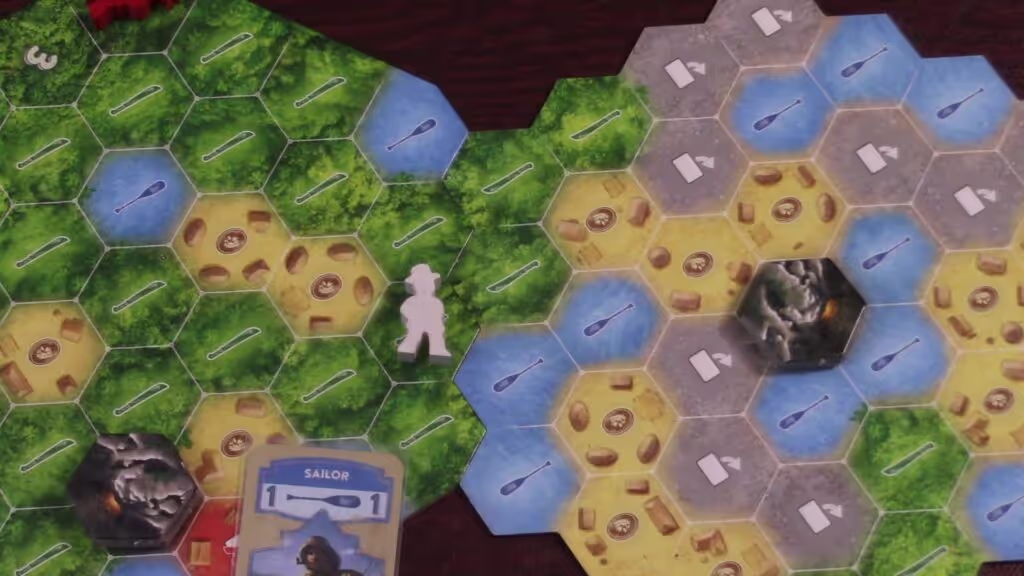
Planning a shared route in the Quest for El Dorado cooperative variant.
I am Spector, dad to Alex (7) and Emma (10). We love the competitive race in Quest for El Dorado, but sometimes the table feels better when everyone pulls the same direction. The co-op variant scratches that itch without buying a new game. It uses the exact same box. The only thing you add is a printed PDF from BoardGameGeek filepage 209539.
If you want the standard competitive rules first, read our Quest for El Dorado setup and strategy guide. For solo play, see the solo variant guide. For other co-op games the family enjoys, check our cheap cooperative board games roundup.
What the Co-op Variant Changes
The base game is a competitive deck-building race for 2 to 4 players ages 10 and up taking about 60 minutes; the co-op variant keeps the components but replaces the win condition with a shared goal against an automated rival.The official Ravensburger rulebook does not include a cooperative mode. The variant by Anakin13 (BGG filepage 209539) is a fan-made document, not publisher material. That distinction matters. We treat it the same way we treat our Ravensburger Explorers solo adaptations: clearly labelled, clearly sourced, and never confused with the box rules.
Co-op Variant Setup
Set up the normal board and market, then add the rival adventurer token and the variant rule sheet; the team shares one combined deck and hand instead of individual decks.- Build the route exactly as the competitive game: starting tile, terrain tiles or strips, ending tile with three finishing spaces, blockades on connections.
- Prepare the market with all 54 expedition cards in the standard six starting stacks plus 12 reserve stacks.
- Create the team deck — shuffle together 4 Travelers, 3 Explorers, and 1 Sailor (the normal 8-card starter). This is the single shared draw pile for the whole team.
- Draw a shared hand of 4 cards from the team deck.
- Place two team adventurers on starting spaces 1 and 2 (or 1 and 3 for a wider start).
- Place the rival adventurer on the rival starting space defined in the variant (usually the farthest starting space from El Dorado).
- Keep the variant rulesheet handy for rival movement, difficulty settings, and any special card effects.
The caves variant from the official rulebook can be added on top if the group wants more decisions. Follow the caves setup on rulebook page 11, then layer the co-op rival rules over it.
How a Co-op Turn Works
On each turn the team discusses and decides together which cards to play for movement, which to spend for a market purchase, and how to position both adventurers; then the rival takes its automated move.- Team discussion — open conversation, no hidden information. Decide which adventurer moves, which cards power that movement, and whether to buy a market card.
- Play cards — use cards from the shared hand to move one or both adventurers following normal movement rules (match symbol, meet power, leftover power carries to adjacent same-type spaces). You may buy up to one market card per turn using coin values from played cards.
- Discard played cards to the shared discard pile. Cards played to enter base camp spaces are removed from the game as normal.
- Draw back to 4 cards from the shared draw pile. Reshuffle the shared discard if needed.
- Rival phase — the rival adventurer advances along the shortest legal path toward El Dorado. The variant rulesheet specifies how many spaces it moves per round and how it handles blockades, terrain, and occupied spaces.
The turn passes to the next player clockwise for the next team discussion, but the deck and hand stay shared. Everyone participates in every decision.
Rival Adventurer Mechanics
The rival is an automated opponent that moves a fixed number of spaces each round along the shortest path; it ignores card requirements but cannot enter mountains or occupied spaces.Key rival behaviors from the variant:
- Movement: advances 2 to 3 spaces per round (adjustable for difficulty) along the shortest legal route.
- Blockades: the rival removes blockades automatically when it reaches them, no cards required.
- Terrain: ignores symbol and power requirements, but mountains and occupied spaces still block it.
- Caves: if using the caves variant, the rival does not explore caves.
- Win condition for rival: if the rival reaches any finishing space before both team adventurers arrive, the team loses.
The rival is not a deck-building opponent. It creates time pressure without adding a second deck to manage.
Difficulty Options
The variant includes three difficulty levers: rival speed (2 or 3 spaces per round), route length (short, standard, long), and number of adventurers the team must bring home (one or two).| Difficulty | Rival speed | Route | Adventurers needed | Best for |
|---|---|---|---|---|
| Family | 2 spaces | Standard (5 tiles) | 2 | First co-op play, kids 10+ |
| Standard | 2 spaces | Standard (5 tiles) | 2 | Experienced families |
| Challenge | 3 spaces | Standard (5 tiles) | 2 | Veteran players |
| Marathon | 2 spaces | Long (7 tiles + strips) | 2 | Epic game night |
| Sprint | 3 spaces | Short (3 tiles) | 1 | Quick 30-minute game |
We started on Family with the standard route. Alex liked that the rival felt like a storm chasing us. Emma appreciated that she could plan two moves ahead because the rival was predictable.
Co-op Variant vs Competitive Base Game
The table below compares the cooperative variant to the competitive base game across the key rule differences so you can see what changes and what stays the same.| Rules aspect | The Quest for El Dorado (competitive) | Co-op variant (Anakin13) |
|---|---|---|
| Players | 2 to 4 competitive | 1 to 4 cooperative |
| Ages | 10 and up | 10 and up (same box) |
| Playtime | 30 to 60 minutes | 30 to 60 minutes |
| Decks | One 8-card deck per player | One shared 8-card starter deck |
| Hand | 4 cards per player | 4 cards shared by team |
| Adventurers | 1 each (2 each in 2-player) | 2 shared team adventurers |
| Rival | Other players | Automated rival token |
| Victory | First to El Dorado, tie-break by blockades | Both team adventurers reach El Dorado before rival |
| Turn structure | Individual sequential turns | Shared decisions, then rival moves |
| Resource pooling | No, individual decks and hands | Yes, fully shared deck and hand |
| Market | Standard 6+12 stacks | Standard 6+12 stacks |
| Caves variant | Optional official variant | Compatible, layer on top |
| Official status | Ravensburger rulebook | Community PDF on BoardGameGeek |
Strategy Tips for Co-op Play
Because the deck and hand are shared, prioritize movement cards that serve both adventurers on the upcoming route and buy market cards that fill gaps the team cannot cover with the starter deck.- Read the whole route first. Before turn one, lay out the tiles and identify the symbol sequence. Buy cards that match the next three spaces, not just the immediate one.
- Keep the hand balanced. With one shared hand of four cards, you cannot afford to hold three machete cards when the next five spaces are water. Discard aggressively at base camps.
- Use both adventurers. The variant wins when both arrive. Do not let one adventurer lag while the other races ahead. The rival does not wait.
- Blockades are free for the rival. If a blockade sits on the rival’s shortest path, it disappears when the rival reaches it. Consider clearing blockades early if they slow your team more than the rival.
- Action cards are team assets. Scientist, Cartographer, and Transmitter benefit the whole table. Compass and Travel Log thin the shared deck fast — use them when the deck feels bloated.
- Communicate the rival’s path. Each round, trace the rival’s shortest route. If it diverges from your path, you buy time. If it converges, accelerate.
Related Co-op Guides
If your group enjoys the shared-deck teamwork feel, these other co-op how-to guides use similar mechanics:
- How to Play Pandemic Hot Zone North America — streamlined co-op pandemic fighting
- How to Set Up Forbidden Island — tile-laying co-op with rising water tension
- How to Play The Grizzled — WWI co-op with hand management and morale
For buying recommendations, our best cooperative family board games and games like Pandemic lists compare the top co-op picks by age, player count, and playtime.
Frequently Asked Questions About Quest for El Dorado Co-op
Is there an official cooperative mode for Quest for El Dorado
No the base game from Ravensburger is competitive only the cooperative mode is a community variant by Anakin13 on BoardGameGeek.How many players can play the Quest for El Dorado co-op variant
The variant supports 1 to 4 players in cooperative mode plus a solo mode.What is the goal in the cooperative variant
The team must get two adventurers to El Dorado before an automated rival adventurer reaches it.Do I need extra components for the co-op variant
No the variant uses only the base game components no extra cards or pieces are required.How does the rival adventurer work in co-op mode
The rival moves automatically along the shortest path each round the variant rules define its speed and behavior.Can I adjust the difficulty of the co-op variant
Yes the variant includes options to change the rival speed the route length and the number of adventurers needed.Is the co-op variant good for kids
Yes it removes direct competition and lets the family work together the base game age 10 and up still applies.Where do I find the co-op variant rules
Download the PDF from BoardGameGeek filepage 209539 by Anakin13 titled A Quest For El Dorado Solo Co-op Competitive Variant.Editorial Standards
We never accept payment for positive reviews. Affiliate links support our work at no cost to you. All games are tested with our family before review.