
How to Teach Sushi Go to Kids | Family Game Night Steps
I'm a dad who fell back in love with board games so I could play them with my two kids, and now I share honest, parent-first reviews of what we love. I'm not on social media, I quit it a long time ago.
The Quick Answer
Teach Sushi Go to kids by starting with nigiri and maki, then adding wasabi, dumplings, and pudding. Ages 8 and up, 2 to 5 players, about a 15 minute game.
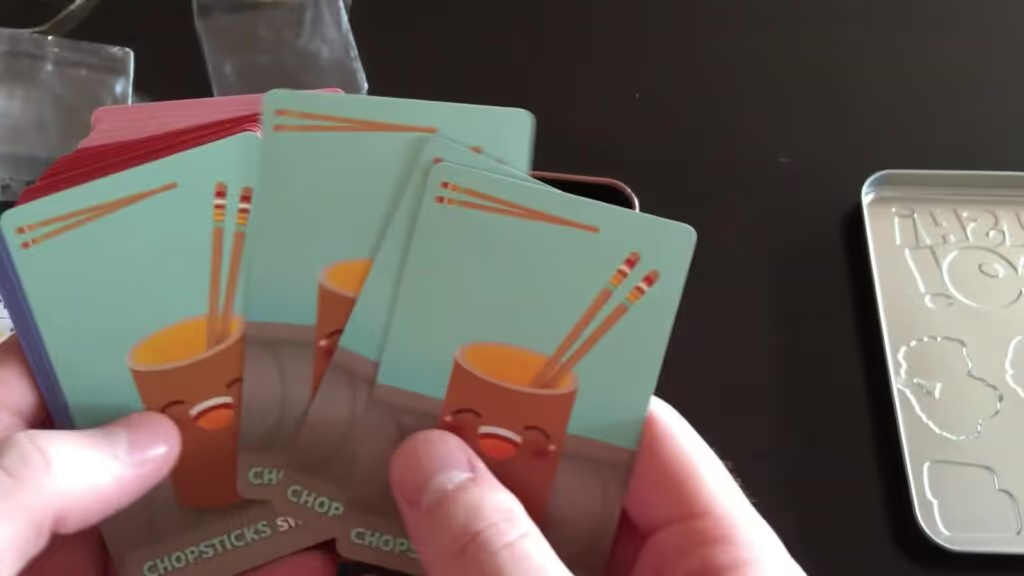
Players holding Sushi Go cards with chopsticks and a smiling cup illustration.
I am Spector, a dad to Alex, 7, and Emma, 10. I taught Alex Sushi Go on the living room floor in about five minutes, and the trick was that I never explained the whole game. I dealt a short hand, showed him the one move, and let him play a round before he knew what anything scored. He was hooked on the passing long before he cared about the points.
The mistake I made the first time was reading the rulebook out loud. Ten seconds in, Alex was gone. The second time I shut the book, handed out cards, and taught the move by doing it, and that is the method this page lays out. There is one move to learn, a set order for the cards, and a short first game that stops before anyone gets bored.
Affiliate disclosure: this page contains Amazon affiliate links. If you buy through one we may earn a small commission at no extra cost to you, and it never changes the advice above.How to teach Sushi Go to kids step by step
Teach Sushi Go to kids step by step in a short first game: deal a small hand, teach the one move, play a round, and explain scoring only after the cards are already in front of them. That order keeps a child playing instead of listening.
Here is the plan I use, and it gets a brand new player moving in a few minutes:
- Deal a short hand of five cards to each player, not the full hand. Fewer cards means fewer choices and a round that ends while the child is still having fun.
- Teach the one move out loud. Look at your hand, take one card you want, and pass the rest to the player on your left. That is the whole turn, and everybody does it at the same time.
- Play one practice round slowly. Let the child ask what to take, and answer with what a card does rather than what it is called.
- Score the practice round out loud, one card group at a time. This is where the point values land, because the child can see their own pile.
- Add the rest of the cards over the next two or three games rather than on day one.
Every step, how long it takes, and what the child is really learning:
| Teaching step | How long it takes | What the kid learns |
|---|---|---|
| Set out Sushi Go and deal a short hand of 5 cards | About 1 minute | That the game is small and quick, not a long rules lesson |
| Teach the one move, pick a card and pass left | About 2 minutes | That every turn is the same, which is what makes it safe to play |
| Play one practice round with open hands | About 5 minutes | How to choose, and how a hand of cards shrinks as it passes |
| Score the practice round one group at a time | About 2 minutes | That a single card can score, and that sets score more |
| Add the remaining cards over the next games | A game or two | Patience, and how to hold a plan across a whole round |
The same shortcut is why games that do not need a rulebook are the easiest way to start a mixed age table.
What age can kids learn Sushi Go
Sushi Go is rated ages 8 and up, and that fit is honest: most 8 year olds play the full game, while a 7 year old can join with a grown up helping with the tally. The move is easy at any of those ages. The counting is the only part that needs a hand.
Alex started at 7 and played happily while I counted out loud with him. Emma started at 8 and never needed the help. The gap was never the rule, it was adding up maki icons and set values at the end of a round. If your child is on the younger side, seat them next to you and count together. You can also play with open hands for the first few games, which lets you coach without hovering.
For the setup and the card values themselves, our Sushi Go how to play guide has the full reference. This page stays on the teaching.
The order to teach the Sushi Go cards
Teach the cards in a set order so nothing feels random: nigiri and maki first, then the set cards, then wasabi, and pudding last. Each group adds one new idea, and a child who has the first group already has something to do on every turn.
Start with nigiri and maki
Start with nigiri and maki, because nigiri are single cards with a plain points value and maki is a visible race for the most icons. There is no set to complete, so a beginner can score immediately. Show them that a squid is worth more than an egg, then let them race for maki icons and count who is ahead.
Add tempura, sashimi, and dumplings
Add the set cards once the first two groups feel easy. Tempura needs a pair, sashimi needs three, and dumplings pay more the more you hold. This is the first real planning step, so play slowly and let the child spot their own almost set.
Save wasabi for when they can hold a plan
Save wasabi for a later game, because it only pays off if a nigiri lands on top of it. Call it a booster that triples one piece of sushi, and let the child choose when to use it. If it sits empty, that is a fine lesson too.
Introduce pudding last
Introduce pudding last, at the very end of a game, because it is not scored in a round and it carries across the whole game. Once a child can finish three rounds, pudding adds the twist of a card that matters only at the end.
How to keep the first Sushi Go game short and calm
Keep the first Sushi Go game short by playing one or two rounds instead of three, using a short hand, and stopping while the child still wants more. A full game of Sushi Go is exactly three rounds, but nothing about teaching requires you to finish all three on day one.
A few house habits make the first game kinder. Play with the cards face up so you can nudge a choice without taking over. Let the child be the scorekeeper once, even if the numbers are messy, because holding the pencil makes the points real. And always stop a round early rather than late, so the last memory is a good one. If you want the same gentle first round approach for another game, our teaching kids Spaceteam guide uses the same play first, explain second method.
Why Sushi Go is good for family game night
Sushi Go is a great first drafting game for family game night because every player plays on every turn, a round lasts only a few minutes, and nobody can be knocked out or ganged up on. That combination is rare, and it is why this is the box we reach for when we have a spare fifteen minutes.
The learning hides inside the play. Adding maki icons and set values is counting a child actually wants to do, and choosing what to pass is a quiet lesson in thinking a turn ahead. Our guide to Sushi Go as a teaching tool for math and strategy covers the thinking side in more depth, and the wider idea of learning without it feeling like a lesson is why games beat worksheets at our table.
Once the game clicks, the next step is playing to win, and our Sushi Go strategy guide is where a confident kid goes. If the family wants a second box for the shelf, the full Sushi Go card game review covers what is in the tin and who it suits. The tin also travels well, which is why it earns a spot in our Sushi Go travel game guide.
Our Sushi Go teaching story
Our funniest teaching moment came from the chopsticks card. Both kids wanted it because taking two cards in one turn felt like a superpower, so for a week our games were a race for chopsticks, and nobody passed me the card I actually wanted. It taught me to stop teaching and just watch.
Alex learned Sushi Go at 7 with a short hand and me counting beside him, and the card that finally made scoring click was pudding. He grabbed one in the last round on a whim, and when the game ended he gained 6 points for the most pudding while I lost 6 for the fewest, and he beat me by two. He did not care about the win. He cared that the dessert card he took for fun had quietly won him the game, and after that he wanted to learn every set on the board. Emma at 10 now does the counting for both of them and coaches her brother on what to pass, which is its own small victory.
- Similarities: Both are drafting card games where you pick one card from a hand and pass the rest, and both stay light enough for a family table.
- Differences: Sushi Go is a fixed 2 to 5 player deck in a tin with a single set of cards, while Sushi Go Party adds a menu of card types and plays up to 8.
- Why this game fans will enjoy it: If your family loves the pick and pass habit of Sushi Go and wants more variety once the kids are fluent, Sushi Go Party is the natural step up with the same core move.
When the family is ready for a bigger table, our games like Sushi Go list rounds up the drafting games that fit, and our how to play Catan guide is the classic next step once a child wants a board and a little trading.
Sushi Go teaching FAQ
How do you teach Sushi Go to kids?
Teach Sushi Go to kids one move at a time: deal a short hand, show them how to pick one card and pass the rest to the left, then play a round before you explain any scoring. Scoring lands better once the child has a pile of cards in front of them.
What age can kids learn Sushi Go?
Sushi Go is rated ages 8 and up, and that fits most kids, though a 7 year old can play with a grown up helping with the counting. The move is easy at 7. The end of round tally is the only part that needs a hand.
What is the best first card to teach in Sushi Go?
Start with nigiri and maki, because nigiri are single cards with an obvious point value and maki is a simple race for the most icons. Add the other sets once those two feel easy. Both score without needing a set, so a beginner can earn points on the first round.
How do you explain wasabi and chopsticks to kids?
Call wasabi a multiplier that makes one nigiri worth three times as much, and call chopsticks a one time bonus that lets you take two cards and then goes back into the hand. Both are easier to show in play than to describe in words.
How do you teach pudding scoring to kids?
Teach pudding as dessert: it sits in front of you until the very end, and then the player with the most pudding gains 6 points while the player with the fewest loses 6. Pudding is the last card group to introduce, once a child can finish a full three round game.
How long does it take to teach Sushi Go?
The pick and pass move takes about five minutes to teach, and the full card set comes together over the first two or three games rather than one sitting. Keep the first session to the move and one scoring group.
Do kids have to play all three rounds of Sushi Go?
No. For a first game, one or two short rounds are plenty, and you can add the third round on the next family game night. Stop while the child still wants more, and the next game night looks after itself.
Editorial Standards
We never accept payment for positive reviews. Affiliate links support our work at no cost to you. All games are tested with our family before review.